
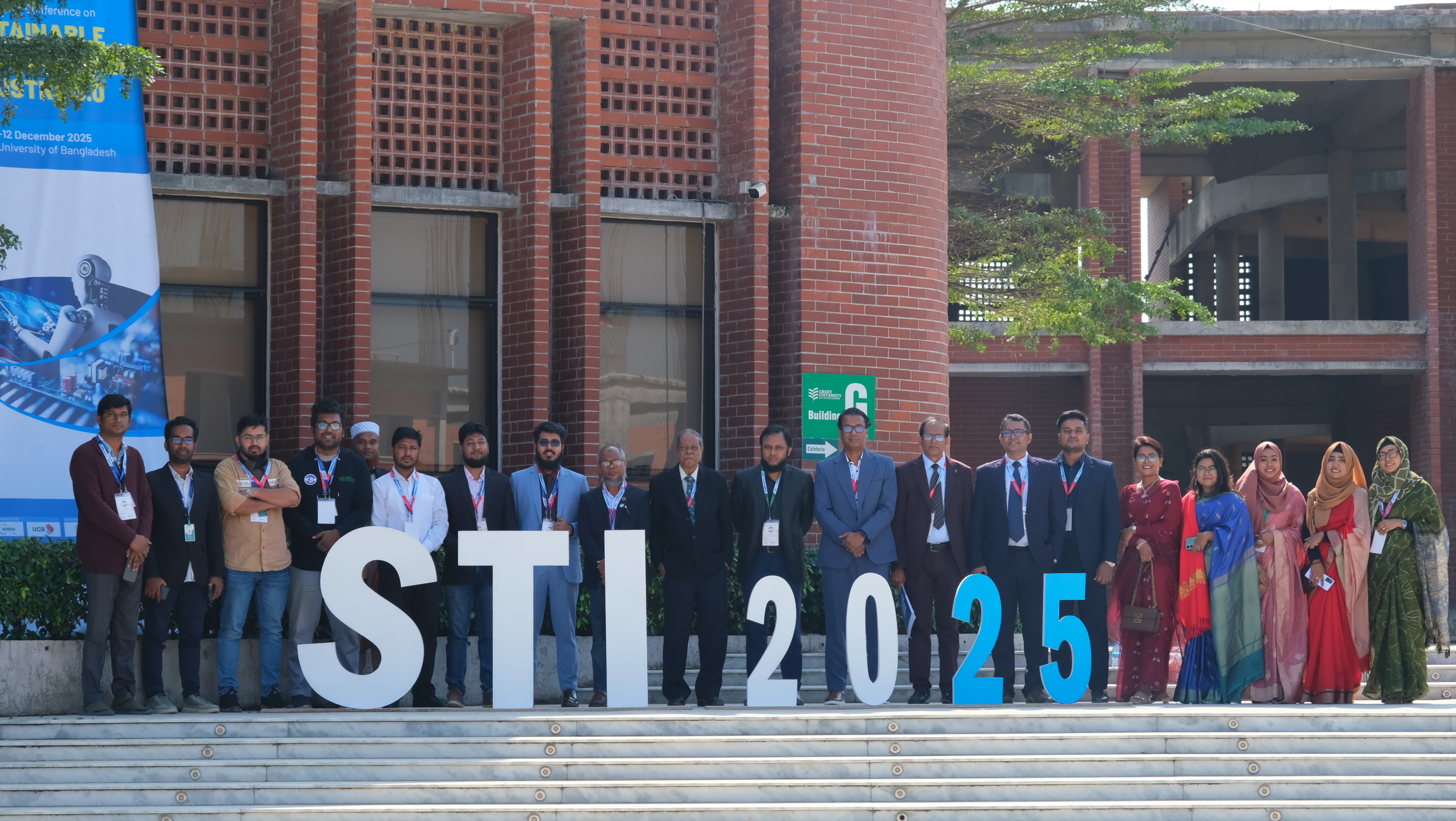
Department of Textile Engineering, Green University of Bangladesh, Participates in the 7th IEEE Sustainable Industry for Technology - 5.0 Conference
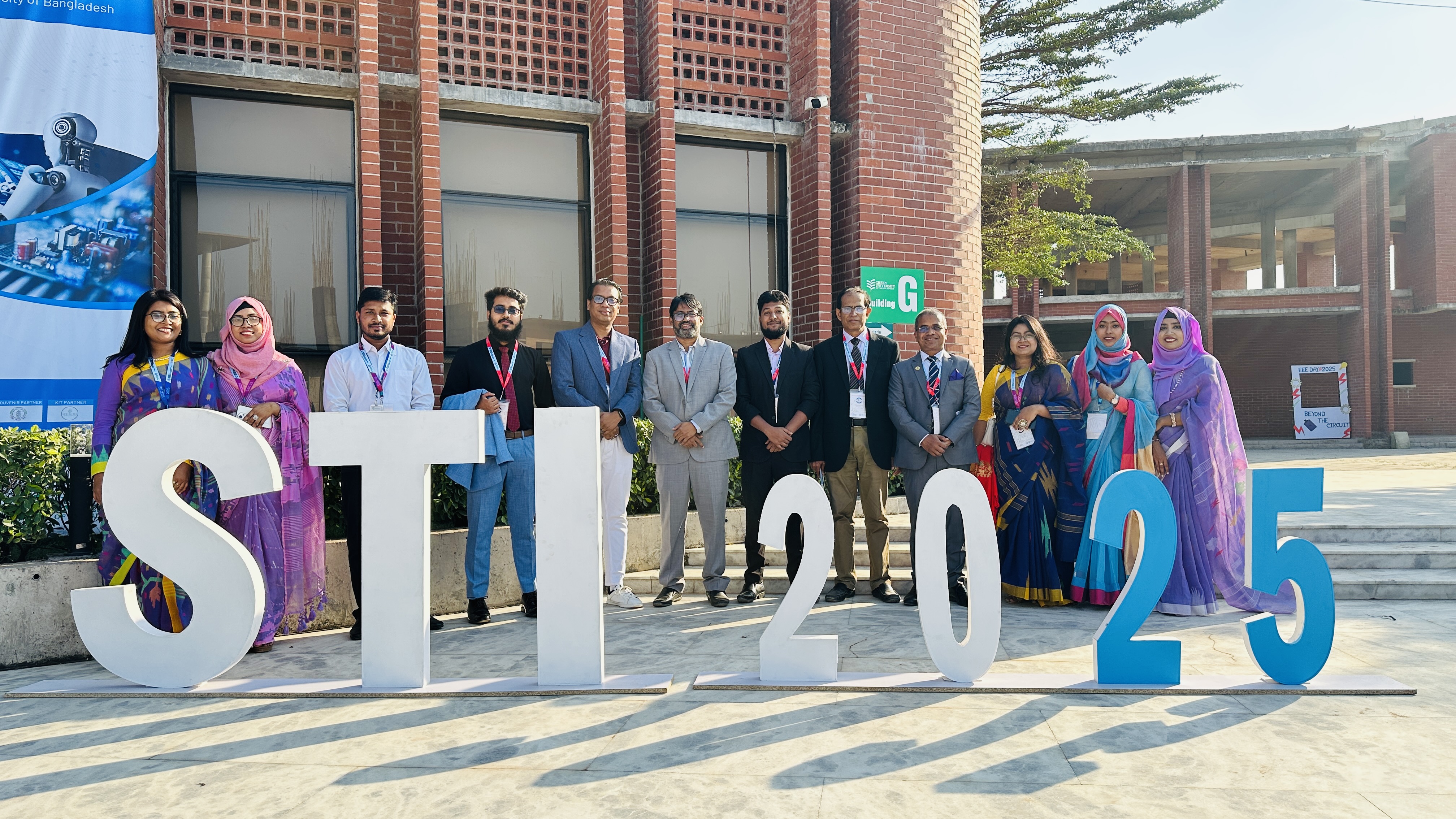
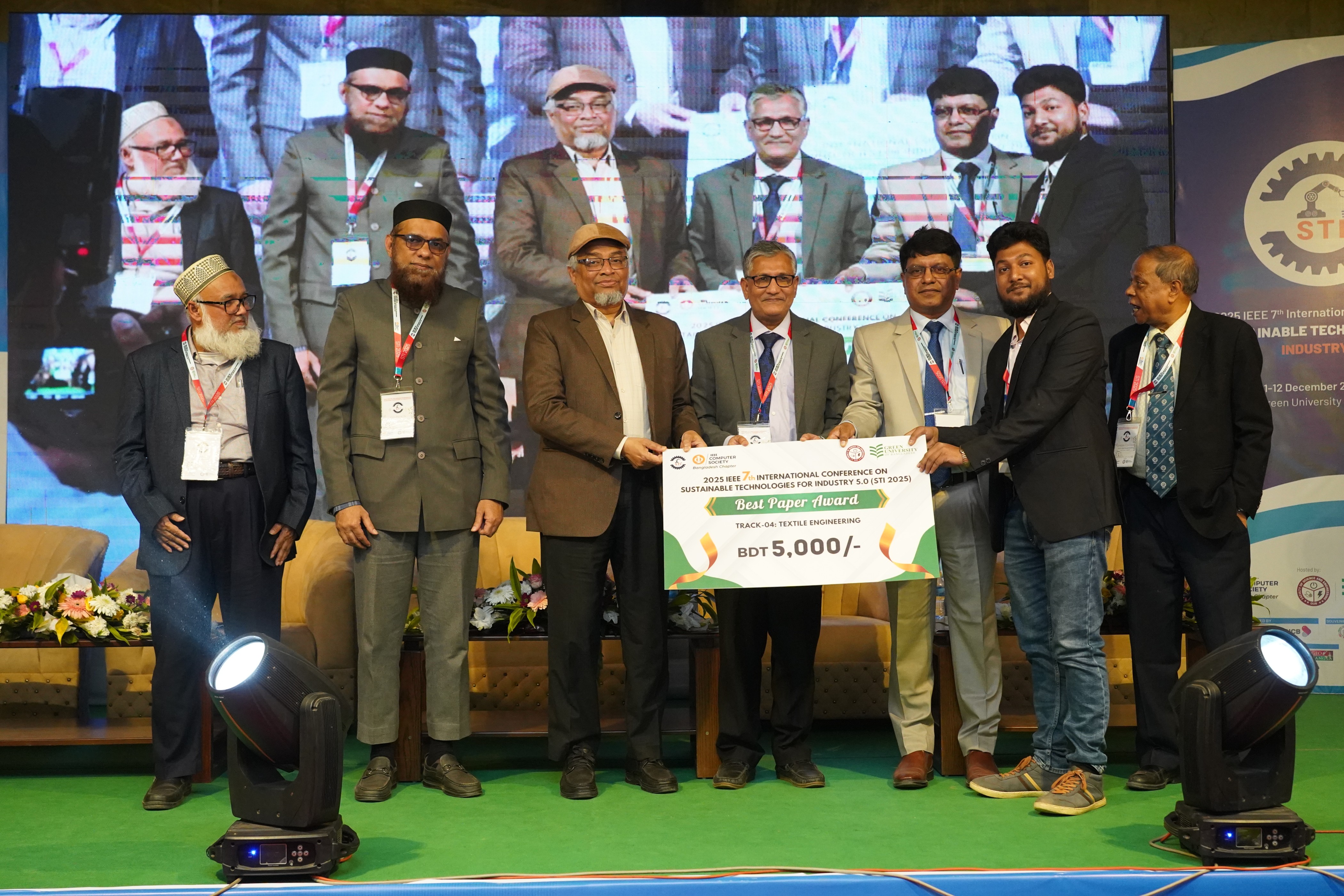
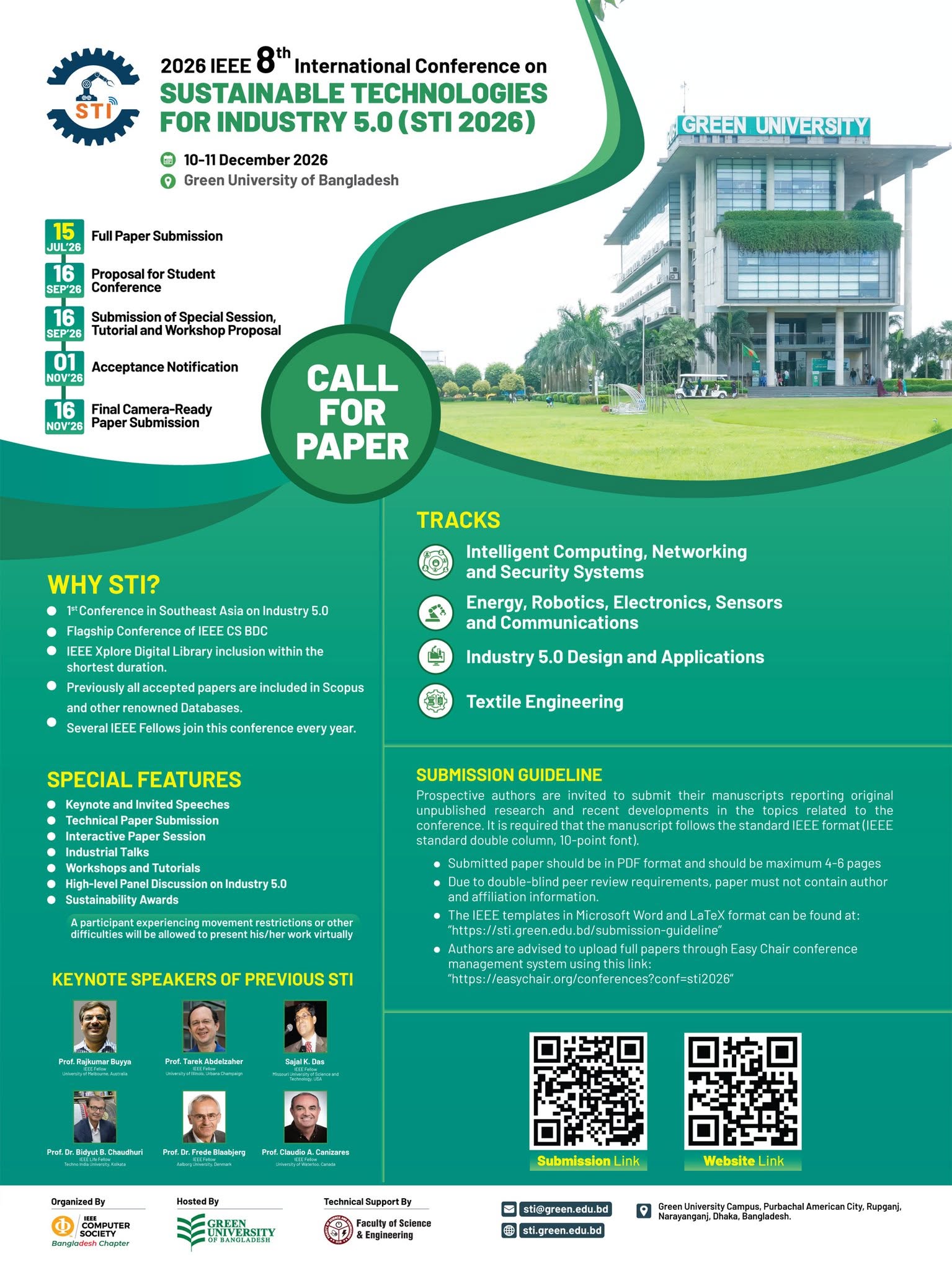
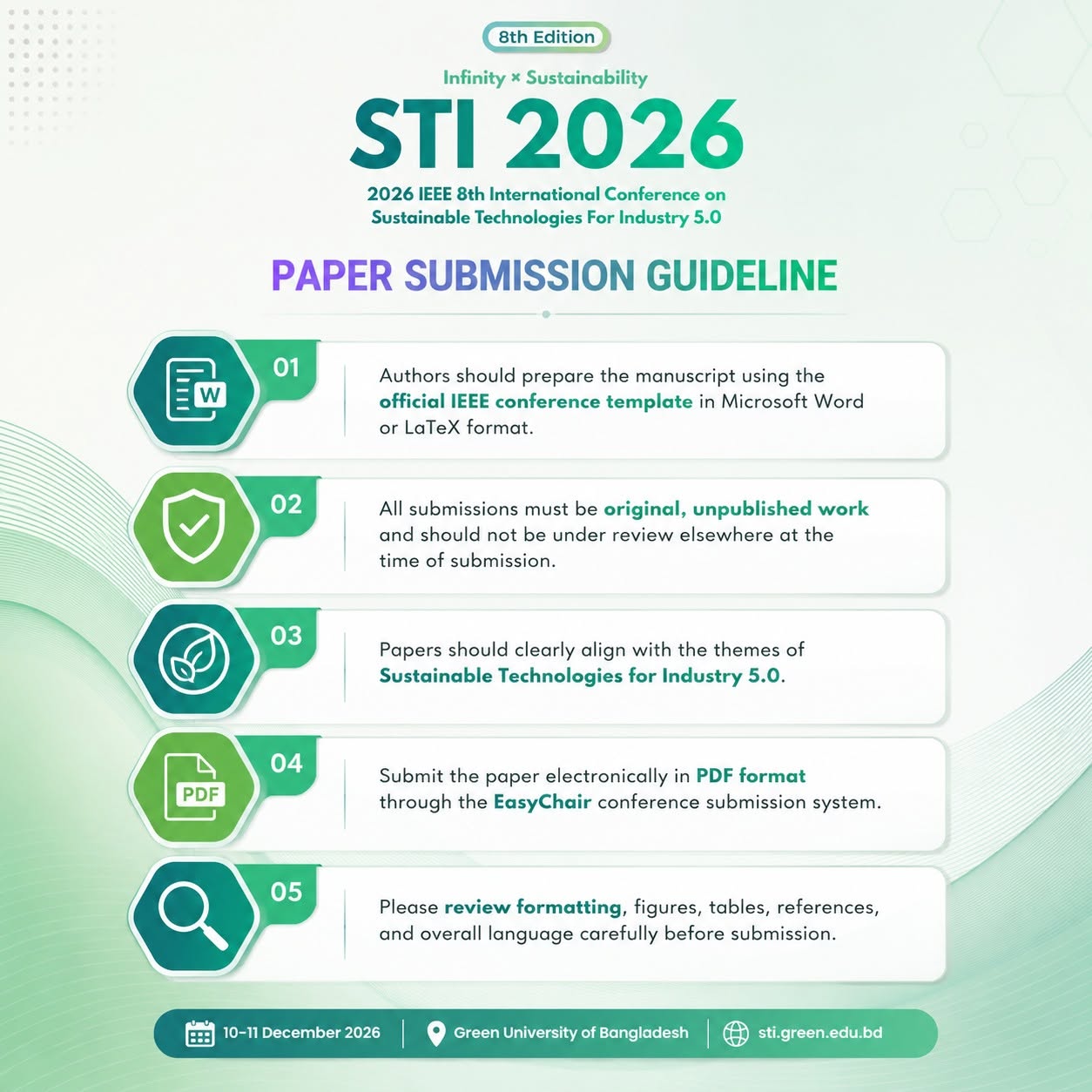
Green University of Bangladesh recently hosted the 7th IEEE Sustainable Industry for Technology - 5.0 Conference on 11th and 12th December 2025, which brought together leading researchers, professionals, and industry experts to discuss innovative approaches towards sustainability in the textile and related industries.
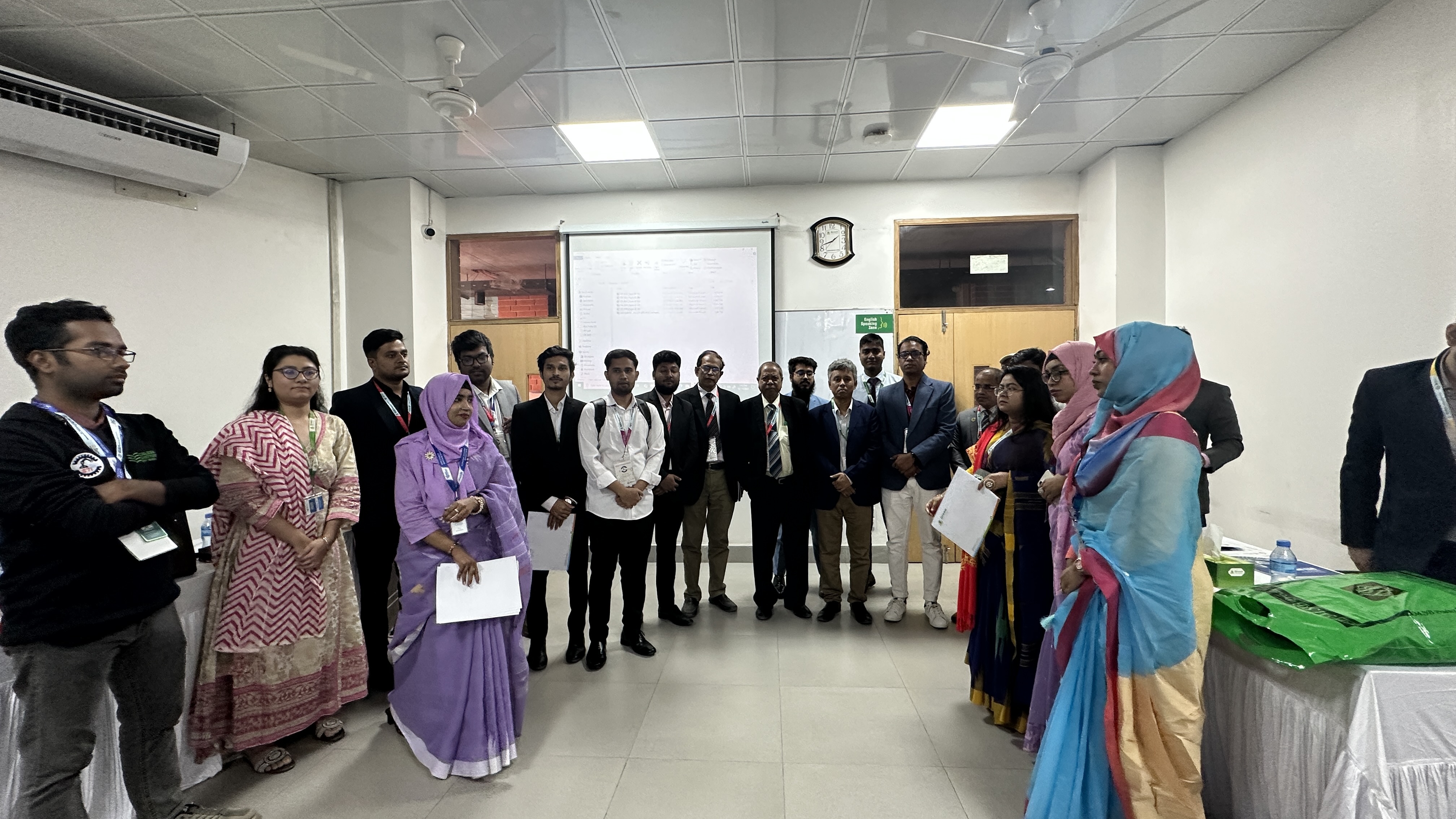
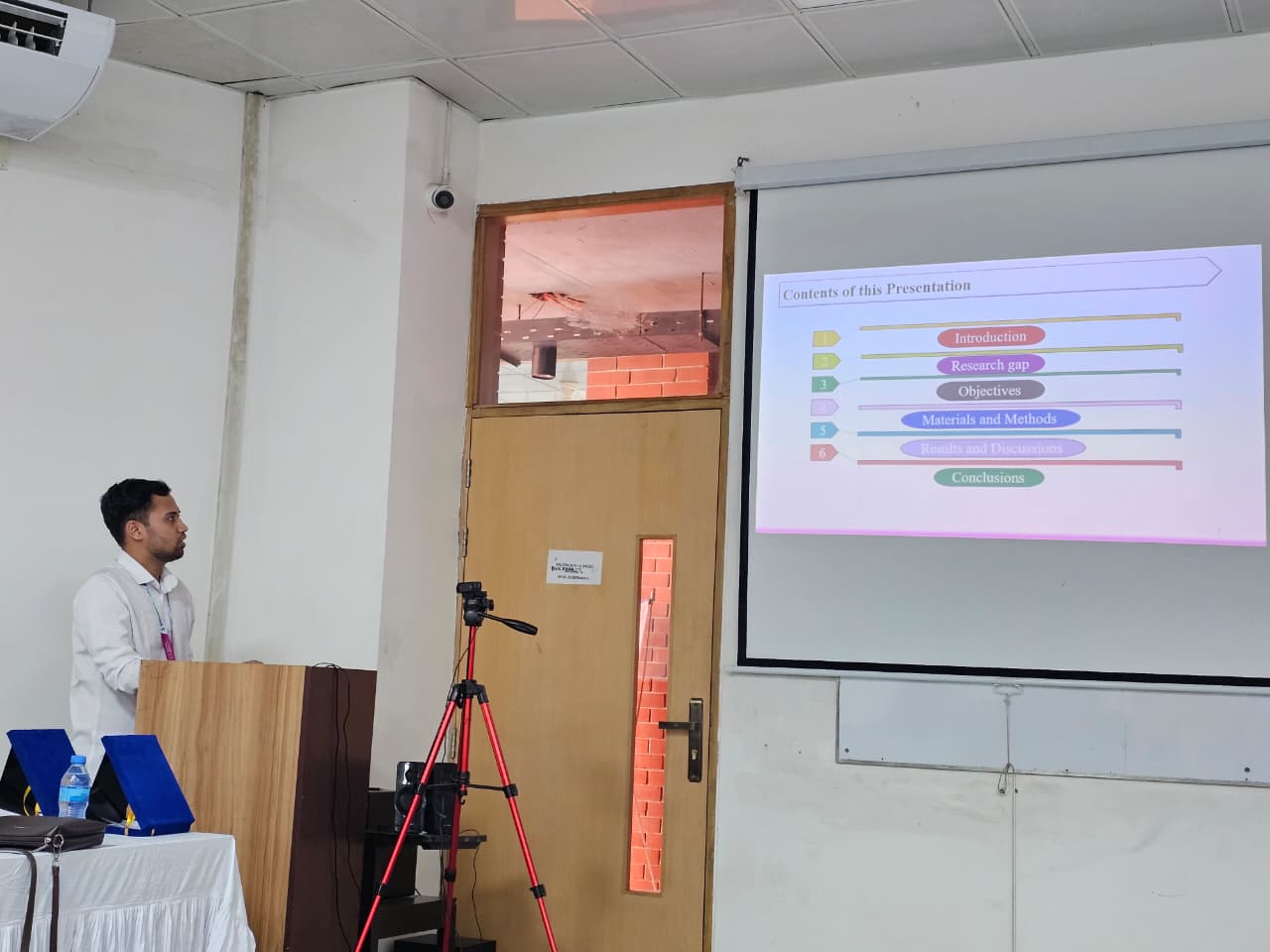
The Department of Textile Engineering at Green University of Bangladesh played a significant role in the conference, with faculty members actively participating and presenting their cutting-edge research. The conference featured Session T1P4: Textile Waste Valorization & Sustainability, chaired by Prof. Dr. Mohammad Forhad Hossain and Dr. Shariful Alam, which took place at L-101.
The session focused on the latest advancements in textile waste valorization and sustainability, with several faculty members from the Department of Textile Engineering presenting their research. The following papers, submitted by the department's faculty members, were highlighted during the session:
Valorization of Peanut Red Skin Food Waste for Sustainable Dyeing and Functional Finishing of Viscose Fabric by Mehnaz Jebin, Md. Sherazul Islam, Ikramul Hasan, Faijun Farin, Md. Mutasim Uddin, Md. Mazharul Helal, and Nusrat Jahan Mousumi. This paper explored the use of peanut red skin as a sustainable alternative for dyeing and functional finishing of viscose fabric.
Sustainable Treatment of Textile Waste Water Using Sawdust Waste–Derived Activated Charcoal by Nusrat Jahan Mousumi, Md. Dulal Hosen, Md. Sherazul Islam, Mehnaz Jebin, Suraiya Ireen, Md. Mahbubur Rahman, and Md. Mutasim Uddin. This research focused on the use of activated charcoal derived from sawdust waste for sustainable textile wastewater treatment.
Influence of Liquor Ratio on the Physical and Surface Properties of Peroxide-Bleached Denim Apparel by Asib Molla, Faijun Farin, Mehnaz Jebin, Suraiya Ireen, Nusrat Jahan, Mohammad Shariful Alam, Md. Mazharul Helal, and Md. Mahbubur Rahman. The study investigated how liquor ratio influences the physical and surface properties of peroxide-bleached denim apparel.
“Green Synthesized TiO2 Nanoparticles for Photocatalytic Treatment of P/C Blended Dyeing Wastewater” by Mohamad Mohiminul Pritom, Md. Mahbubur Rahman, Md. Asraful Islam, Md. Foysal Shah, Fabiha Ahmed Eva, and Shahjalal Patwary. This paper discussed the green synthesis of TiO2 nanoparticles and their photocatalytic role in treating dyeing wastewater.
Eco-Friendly Food Packaging from Agricultural By-Products: Design, Fabrication, and Performance by Suraiya Ireen, Md. Mahbubur Rahman, Musarrat Mahzabin, and Nusrat Jahan Mousumi. This presentation highlighted the development of eco-friendly food packaging made from agricultural by-products.
Impact of Natural and Synthetic Polymeric Materials on Stitch Performance by Md. Mubashwir Moshwan, Md. Mehedi Hasan, Md. Monir Hossan, Md. Omar Faruque, Md. Al Amin Hossain, and Md. Alif Robaiyat. This study explored how natural and synthetic polymeric materials impact stitch performance in textiles.
The session was well-received, offering valuable insights into sustainable practices in the textile industry, including innovative approaches to waste management, eco-friendly materials, and resource recovery. The participation of faculty members from the Department of Textile Engineering further demonstrated Green University’s commitment to advancing research and fostering sustainability in the textile sector.
The 7th IEEE Sustainable Industry for Technology - 5.0 Conference served as an excellent platform for sharing groundbreaking research and collaborative discussions aimed at making the textile industry more sustainable and environmentally responsible.
Latest News
Find Us
- Purbachal American City, Kanchan, Rupganj, Narayanganj-1461, Dhaka, Bangladesh
+880-9614-482482, 01324-713502, 01324-713503, 01324-713504, 01324-713505, 01324-713506, 01324-713507, 013247-13508
- addmission@green.edu.bd
Departments
Centers
- Center for Career Development (CCD)
- Center for Language and Cultural Studies (CLCS)
- Center For Research Innovation and Transformation and Sustainability(CRITS)
- Center for International Affairs (GCIA)
- Center of Excellence for Teaching And Learning (CETL)
- Center for Continuing Education (CCE)
- Institutional Quality Assurance Cell(IQAC)
Offices
- Office of the Vice Chancellor
- Office of the Pro Vice Chancellor
- Office of the Treasurer
- Office of the Registrar
- Office of the Exam Controller
- Office of the Admission
- Office of the Accounts
- Office of the GCITS
- Office of the Proctor
- Office of the Library
- Coordination Office
- Office of the Public Relation
- Office of the Student Affairs
- Medical Center
- Office of Logistics
- Others Office
© 2003-2026 Green University of Bangladesh. All Rights Reserved.
Developed by GCITS